All posts by Markus Gärtner

The challenge of the Nine Smurfs

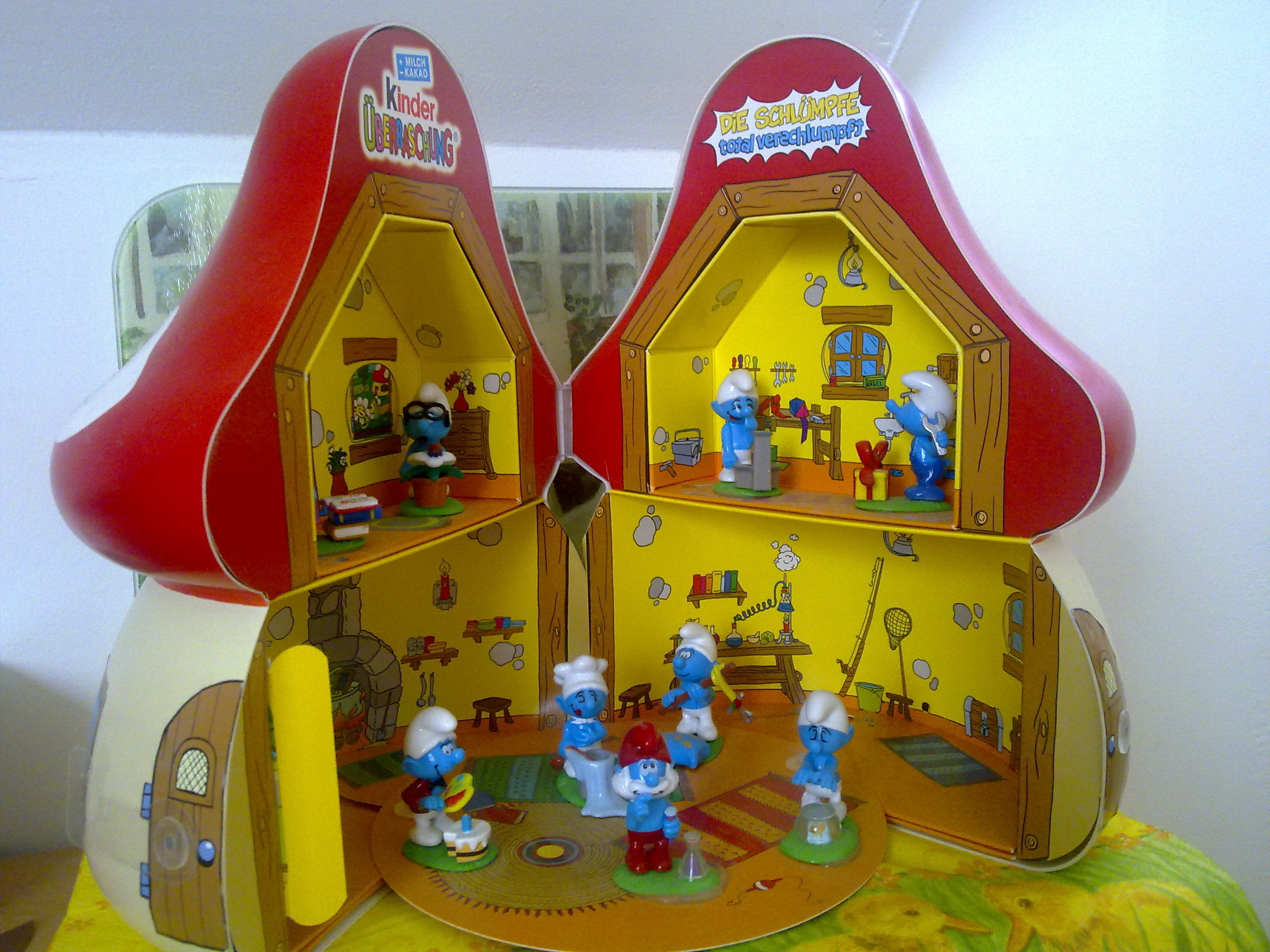
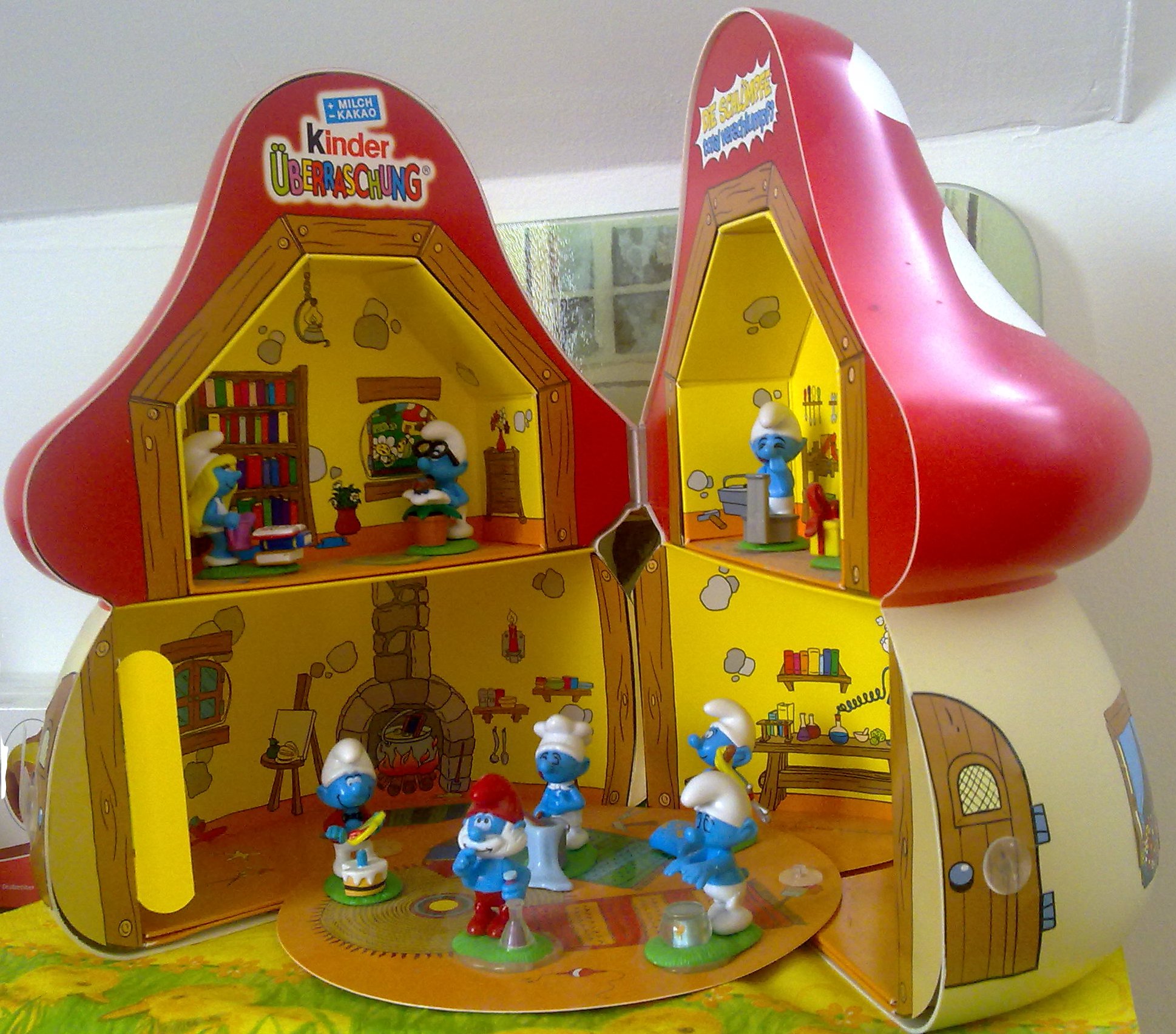
On Monday, I issued a little challenge on a smurf house we got as a wedding gift. The challenge resulted in eight comments overall, and I was struggling to clarify my initial observation. To make things short, I learned something from the comments. What I initially observed was, that the Brainy Smurf was reading in front of a flower, while Smurfette carried a watering pot in front of a pile of books on the first floor on the left. From the comments on my blog I learned, that I should have taken the hindsight, and do some more follow-up testing. The variety of similar mistakes in the arrangement of the smurfs was fabulous.

That said, when going through the comments, I need to find a way to rank the responses I got. A simple second-order measurement could be the number of comments per individual. In this category, Jeroen Rosink is the clear winner. He left two comments. This does not say anything regarding the quality of the comments, of course. So, I needed to find a different rating scheme.

So, on the contextual things remarked, I even didn’t get a hint, why Painter Smurf is in front of the cake, why Handy Smurf is trying to fix the gift in front of him, why Chef Smurf wants to taste the blue paint, or what any of the other smurfs do there.

Regarding the building, the inconsistencies in the building itself and the weather outside are great things to notice. In addition the arrangement of the Smurfs with regards to the background could be a point. Why is Papa Smurf working in that distance to his table? Why does the Fisher Smurf fish the pillow from the Sleepy? Where are the stairs to the first floor? Where is the chimney outside? Well, if you would be able to look on the back of the house (a mushroom) and get a 3d impression, you could see that the walls on the first floor are less in depth than on the ground. So, the chimney could go out of the mushroom house outside, but on the back of the house no indication of any chimney are present. The comment from ElizaF was also very well put. The structure of the building is not well architectured, as there is no kitchen, and no toilets. Maybe Smurfs don’t need them.

Finally, the answer I liked best came from Anne-Marie Charrett, and I was tempted to state that it’s a pure example of the English humor, but recognizing that she’s from Ireland, I realized that I should refuse.

I dunno, if you live in a world where its ok to have blue skin, anything could be acceptable. :)

Well said, Anne-Marie.

Last, but not least, here are some things I missed. I didn’t see anyone trying to find references on the Smurfs and the particular campaign run by a German producer. Before putting up the challenge, I needed to verify that our Smurfs weren’t just misaligned. Thereby I found a picture of the arrangements as well as a selling offer for the diorama. For this write-up I used the list of Smurfs from wikipedia. The plug Milk, minus Kakao is part of the brand Kinder Überraschung, indicating that these sweet chocolate eggs are some kind of healthy. Overall this is very great domain knowledge, which could have helped in the decision on “problem or not a problem?”

Craftsmanship and Quality

Currently there is a thread ongoing on the XP mailing list. Based on a rant from Nick Robinson, the discussion started about programmers that take pride in their work as opposed to programmers that just do that coding stuff. Today, Kurt Häusler wrote a reply in which he states his experience. You should go and read it – now – the initial rant from Robinson is in there, too. I’ll wait here for you to come back.

Continue reading Craftsmanship and Quality

A little challenge

Rob Lambert blogged over the weekend on being a tester as opposed to be a follower of something that someone else said. This triggered a little challenge, that my wife and I crossed while taking a closer look on a wedding present we got two years ago.

A former colleague of mine is working in a supermarket, and he was able to organize a collection of smurfs put as gift into some candy eggs. Since my wife collects these toys from the eggs, this was a neat present.

I took two pictures from the arrangement. It’s a smurf house with some smurfs in it, and there is something wrong with it. Tell me what you notice. Here are the pictures (hopefully in high enough resolution):

picture 1
picture 2

In a follow-up I will reveal what my wife and I noticed.

Physical and mental evolution

Human evolution brought up some clever ideas how to survive in the wild. From my courses on becoming a swimming trainer, I know some parts of the physiological aspects in play when you exercise your body. While reading through Pragmatic Thinking and Learning from Andy Hunt, I was amazed that evolution build up the same concepts inside the brain. Here is my summary on it.

Continue reading Physical and mental evolution

The Second System Effect in Software Test Automation

Matt Heusser blogged today on generating new ideas. In his entry, he cites from Weinberg’s Becoming a Technical Leader. Weinberg lists up the three obstacles to innovation – one of the three parts of his leadership model. The three obstacles to innovation are self-blindness, the No-Problem syndrome, and the single-solution belief. Continuing he explains the three keys to innovation based on this: Learn from your errors, learn from others, and copulate together two great ideas to form an even greater idea. Matt also mentions my struggle to find an article where a great software test automation framework became shelfware just because it couldn’t stand the technical challenge – or maybe just the human aspect of it? So far, we just found opinions on software test automation projects having failed, but no real hard data.

So, to overcome this lack of available material, let me write about my experience with software test automation, the problems we had, and how we overcame them. Thereby, I will not only enable myself to learn from my own errors, but also provide a system you may copy yourself, or which you might combine with another great idea that you have established in your company. In fact, most of this shouldn’t surprise you. During the last year, I also presented our approach on a test conference – here‘s the paper I wrote on this.

Continue reading The Second System Effect in Software Test Automation

Software Management 0.5

Just this morning, it appeared to me, and there the solution was to all our problems. It had been there, so directly in front of my face, that I haven’t seen it, but it is so clear now.

We need to separate testing from the act of programming.

Wow. That’s a statement. But I’m serious. It has never worked and the large amounts of failing teams with Scram or Krumban, or whatever they call it, got it wrong. Yeah, Agile got it wrong. Collaboration is for the weak. After having spent over fifteen years with this crap, we need to get our bricks for the silos out from the closet again, and build up walls between those teams. Give testers different offices, on different floors, in different buildings, heck, what am I saying, give them different planets to be on, so they communicate mainly over the bug tracking system.

And I want to see a test plan, with every written detailed test up-front. Now. Show me. And I want to see Gantt chart based progress report, every week, and every day or even twice a day if there is an escalation. And I don’t want to spent time on re-planning. The initial plan must hold. Test design documents are fixed after being created initially. Yeah, that’s what we’re going to do.

While we’re at it, is there a way to get that waterfall model more heavy? How much celebration may we add to it? Just that? Come on, give me more than just the usual bug metrics and that crap. I want three additional testing cycles in the end. And I want QA to approve every delivery we make. Sure, they have to sign it. On paper, three copies to each major division head. Exactly.

If you haven’t figured yet, this is a rant about a personal Black Swan that a friend of mine just told me about his replaced management. Exactly, they’re separating the collaboration between programmers and testers, dividing them, right now, in this century, nearly ten years after the Agile manifesto and it’s focus on team-values, and cross-functional teams. This manager made the experience that developers and testers agree upon a delivery in a dysfunctional way. Therefore he wants to separate them again. And every major change project is failed if it is not implemented after 90 days. I’m not that good as a clairvoyance, so, what would you suggest my friend to do next?

Testing Dojos

About a year ago, I heard about Coding Dojos for the first time. Getting back to work, I nearly immediately tried out the idea with some colleagues. The implementation was great, and we had a lot of fun. Every since I wondered how to get testers involved into this deliberate learning. It took me some time and thought, but now I ended up with Testing Dojos. We ran several of them at work so far. I decided to provide you with some know-how that should get you started as well. In case you’re looking for personal experience, I will be presenting the topic together with a sample session at the XP 2010 conference in Trondheim in June this year.

Continue reading Testing Dojos

Well-crafted and craftly tested software

A while back, I submitted my article Software Testing Craft to the Agile Record. Having coined the zeroth law of professionalism in it, ever since I heard about Uncle Bob‘s call for craftsmanship I believed that the craft of software testing had been formed far longer than the emerging software craftsmanship movement. Having followed the great work in the testing field from Michael Bolton, Cem Kaner, James Bach, Matt Heusser, and the many, many more professional testers out there, built early on the picture of a very well developed craft about software testing.

It definitely pleases me to see a blog entry from Uncle Bob listening to a talk from James Bach. Uncle Bob immediately got the point that James is talking about craftsmanship in software testing. Though, there is one point in which I disagree with him:

I like the fact that testing is becoming a craft, and that people like James are passionate about that craft.

Testing is not becoming a craft, it always was as Jon Bach put it in the comments. I share Jon’s view on this. And it pleases me to see testers talking about their craft for more than a decade now.

Another stream of thought on the comments discusses the fact, that Uncle Bob called for developers to strive to deliver software that put testers out of business. Knowing Uncle Bob as the lead developer on FitNesse, I know that he is not saying to get rid of the testers completely. Far from it. As he stated in his Craftsmanship and Ethics talk, programmers should strive to the ideal that tester do not find any problem in the software they’ve produced. Of course, this does not mean that testers will not find any problem at all. Testing is still necessary. You can’t fool yourself by skipping testing. As Weinberg put it in the Quality Software Management series:

Actually, it ain’t nothin’ ’til it’s reviewed.

Weinberg just provided half the truth. It might be nothin’ ’til it’s reviews, but it still ain’t nothin’ ’til it’s tested, too.

Uncle Bob initially called for the craftsmanship movement with the call for

Craftsmanship over crap.

At around that time, Lemmy Kilmister stated in the song “Teach You How To Sing The Blues” from his band Motörhead

There’s no excuse for bullshit.

Later on, Uncle Bob refined his fifth value to

Craftsmanship over Execution

in order to reflect the nature of the Agile manifesto. Back in November I heard a famous German quote for this from Jens Coldewey:

Operative hectic replaces windlessness of the mind.

(It doesn’t translate that well, but it basically says that shouldn’t try to run before you walk.)

Amen.